Jax, Me, and the Surf

Jax, Me, and the Surf
Showing posts with label maintenance. Show all posts

Friday, August 19, 2011

Follow Up Sump Work

I took the opportunity today to give the sump and DT a quick vacuum.  While I was at it, I drained the sump completely (as much as I could) in order to put the baffles back in place and silicon them in.

They are still drying, and I only had enough silicon to do the first two baffles.  The third should be OK, but we'll see.

I'll fill it back up tomorrow and see how it does.  Hopefully they don't collapse, otherwise I'm going to need more silicon ;)

Here are some shots from today:


Sunday, August 14, 2011

August Update

It's been a few weeks since my last update.  That's about the time the "sump build" started.

Utilizing days off, plus other random moments here and there, I've finally completed the sump... mostly.

Still on the to-do list is to get the baffles worked out.  I went with the "weather stripping" method and got less than stellar results.  Once the baffle situation is worked out, I am going to (once again) attempt to move my HOB skimmer to the sump.  After the skimmer is gone (if possible), I'll then move my heater to the sump.

Other than that, it's up and running.

A couple days ago I ended up (finally) removing the Chaeto from my display tank.  I trashed all of it (about two grapefruit sized balls) except for about a golf ball sized piece.  I threw that down in the sump so as not to have to look at it anymore.  I'm hoping with the new changes, it doesn't last long ;)

Took a few shots tonight.  Didn't get any of the sump (here is my sump gallery), but I did get a few close-ups after lights-out with just the actinics.


Everything is still going well.  I'm not sure if it's the new RO/DI system installed or the sump (perhaps a combination of both), but I've been feeling good thoughts from the tank.

Just before installing the sump and water system, I completed removal of a vast majority of the substrate. Last week's water change consisted of 10 gallons and about 30 minutes.  Such a nice change of pace for cleaning the tank.

Today's water change also included the sump since it'd been working for about a week now.  I utilized the power head I purchased for my salt storage container.  I used it to suck up the detritus on the bottom of the sump and had it pump it through my gravel vacuum tube into a bucket.  The sump took about 5 gallons, and the tank another 10 gallons.  ASW was already made (had been for about 4 days), so I headed down to the basement with three buckets, filled them up, and brought them back up to the tank.

I utilized the same power head to pull water from the buckets into the sump.  The whole process took about 30 minutes again.  Now with all the things I have in place, I KNOW I'm removing much more of the detritus than I was 30 days ago, and I KNOW that I'm not adding anything with my water.

Removing crap and not replacing it while filling with water is a really nice feeling, I must say.  Probably why I was in the snapshot mood tonight.  I have a restored feeling of pride in the tank.

Monday, July 25, 2011

Just about there

So today a spent a lot of time on the tank...  and as life would have it, it doesn't look like it.

Once again I siphoned more sand out.  I probably got another 3 gallons out.  Almost everything except for the sand underneath the anemone bowl.  I ended up changing about 25 gallons of water today (33%) and it looks like crap.

I also took this opportunity to see what siphoning a bare bottom would be like.  It was actually pretty easy.  Water changes are going to be a lot quicker and will use less water in the future.  I bet I can cut the water changes from 20 gallons (27% change) to 10 or 15 gallons (13-20%), depending on how many hermit crabs are in the way.

Had a good day at the LFS today as well.  Had a nice chat with the owner about what I was wanting to do.  Ended up purchasing a RO/DI unit (about damned time), an HOB overflow, three more powerheads (2 x 425 gph and 750 gph), and a return pump rated at 750 gph.  That takes my display flow to 3625 gph (tank turnover of 48 times per hour).  This amount of flow should keep detritus suspended nicely until it is drawn into the sump.  The flow rate for the sump is much lower to allow that detritus to settle there.

Later I stopped by Home Depot with my return pump and overflow to figure out the plumbing.  All my pipes are purchased as well.

So I have everything I need except for the sump container itself.  I'm still undecided between a glass tank, a DIY acrylic box, or a rubbermaid tote.  If I could plumb two totes together, that would be even better.  I have about 36" of width that I'd like to fill, which would give me 12" of storage in the cabinet still.

More later as the build progresses.

Thursday, July 21, 2011

Jax's Reef - The Way it Should Have Been

So I've been trying to decide these last couple of months whether or not to breed clowns.  If I decide not to, there are still some upgrades I'd like to do to the display tank...

Perhaps it's that I'm inexperienced in a majority of aquarium equipment.  And then again perhaps I know precisely what I'm looking at when shopping for equipment and stuff is just really that expensive.

So if I decide to breed the clowns, I'm looking at an initial investment of about $1,000.  Granted, about half of that is equipment I would want regardless of breeding or not - like a RO/DI unit ($300), refractometer ($60), return pump ($100) for a sump installation (either breeding or on the current display tank).  So these are the common items.

If I decide to breed, I'll also require a couple of HOB overflow boxes ($120); microalgae, brine shrimp and rotifer cultures from Florida Aqua Farms ($175), larvae catcher ($100), breeding jugs for the food, air pump ($75), misc plumbing, lights, timers, etc.

If I decide to install a sump, I'll still need one HOB overflow box ($60), misc plumbing parts, light, timer, etc.

Breeding will require an unknown amount of daily time, probably at least a half hour or so.  I really don't think I want to spend money and time on something additional.  Perhaps when/if I retire and need a hobby.  But I currently have plenty to keep my hands full.

I've been back and forth for the last couple weeks.  But today is the day I put my foot down and decide.

I think I've decided NOT to breed, but to make the display tank as it should have been initially - with a sump for convenient nutrient export, housing equipment, and water polishing.

Installing a sump will be no simple or quick task, and while I'm "in there" there are a couple other things I'd like to get done:

  • Remove the display tank so that the sump can be dropped into the cabinet from the top.  This will make installing the sump tank easier than going in from the back and removing the rear vertical support.
  • Level the stand.
  • Removing the remainder of the substrate from the display tank
More plans and thoughts on the matter will follow.

Saturday, July 16, 2011

More Siphoned Sand

Today I did a water change.  I didn't test before changing so I don't have any pre-change data.  I had an opportunity to remove more substrate so I took it.

I ended up removing the rocks in the right third of the tank in order to remove the substrate from that area.  Those rocks are now sitting on bare glass.  When I put them back I wasn't too concerned about how it looked, so it doesn't look all that hot.  After all, those rocks will need to be removed again to make room for the anemone bowl so that I can remove the substrate from underneath it.

About 3 gallons of substrate was removed today along with 25 gallons of water.  I can't believe how much crap there was in the substrate at the edge of the rocks...  Brown powdery crap that would have sat there for a millennia.

Like I said, I'm not happy with the rocks, but I'm happy with the journey.  Once I get the substrate from under the anemone bowl I can concentrate on visual appeal of the placement of rock.  Or, who knows... I may have a sump by then with the currently-unsightly rocks in the sump.  Doubt it though ;)  I need something for the coral to grow on.

That's it for now.  Any pictures posted prior to the end of this journey will definitely be work-in-progress pictures.

Sunday, July 10, 2011

A Slight Juggling Act

So I have a couple things going on salt-water-wise:

Due to the availability of nutrients in the tank for algae (nitrates and phosphates) I've begun removing substrate from the tank.  During my last water change of about 25 gallons, about 4 gallons of substrate was removed.

I decided to remove the substrate for a couple of reasons.  Substrate is (at least partially) the cause for my phosphate levels (feeding is another).  I do not wish to change my feeding habits, so in order to make the single most possible impact with just a single action, substrate removal is my plan.  It's the biggest bang for my buck toward getting nutrients under better control.

Removing substrate will also help with nitrates in an indirect way.  There will be little if any hidden detritus to decay (contributing to both nitrates and phosphates).  This will assist with husbandry, and subsequently will assist in keeping those nutrients in better check.

It's also almost time to begin acquiring breeding equipment.  That will probably take at least a couple of weeks to acquire.  Maybe my goal of grabbing a July clutch is slightly unrealistic...  but definitely an August clutch is possible.

Thursday, July 7, 2011

June Update

Nothing much going on in June except planning and shopping for breeding supplies.

Water changes have still continued (roughly) once a week.

Cyano is still a problem, but not until about day 7 after the last water change.

It's been a while since posting any pics.  I'll get some up today or tomorrow.

About five mushrooms have removed themselves from the main colony in total.

Green Star Polyps have started to spread.  I'll get some close-ups of this.

Anthelia is also spreading.  Photo evidence also on the way.

I'm also planning on getting at least one benthic sump running - I think mostly for the breeding setup.  I hesitate to get one put on my display tank simply because "things happen".  Who knows how long (or prolific) the breeding will be.  I may already be a day late and a dollar short when it comes to selling the fish to local stores.  But that's not my primary focus, so I've yet to inquire.  If nothing else, there's always Ebay and Craigs list.  That puts me in competition with the LFS's, and I'd rather be a partner.

But anyway, if I get a sump for the breeding tanks and things fall through, plumbing the sump to the display tank is "plan b".

Also, I'm toying with the idea of removing the substrate from the tank.  Not all at once, but over the course of months as I do water changes.  I doubt I'll like the look, but it takes 15 gallons for me to properly siphon.  If I don't like the look, I can always paint the outside bottom white.  My only concern is shifting the anemone bowl and causing damage to the anemone's foot.  I may do the perimeter of the bowl in baby-steps so the anemone has time to adjust itself.

That's it for now.

Friday, May 20, 2011

Build it and They Will Come

Been a while since my last post.  I've mostly been hanging out at the Reef Tank forums... learning.  So I suppose a few updates are in order:

My single Stomatella now has company.  I've noticed at least three others.

Since turning my power filter into a chaeto house, water quality seems more stable.  Sure, there are nitrates, but they aren't increasing on a daily basis.  And it's been just over a week since the last water change.  I'm not stretching it to see how far I can go, but I'd also like to not have to blow through 50 pounds of salt in 6 weeks, either.

The last time I removed the power filter I noticed a single Neomeris annulata.  Then when incorporating the power filter once again, the annulata seemed to bleach and nearly go away.  This time I have a small mat of them.  I'll get pictures up sometime soon.

Within the past couple of days I've had another algae bloom.  Mostly cyanobacteria.  So any pictures before the next water change will reflect such.

I'm down to feeding the anemone once a week.  I generally give it three or four freeze-dried krill.  I'm basing this on the amount of krill I found during it's last waste expulsion.  It could probably eat every 5 days, but that's not the easiest thing to keep track of, so once a week it is.

I'm also noticing the beginning of purple and green coraline algae spots on the back glass.  I tend to neglect the back glass hoping that a coral will attach and use it as a growing surface.  Some corals seem like they only grow on the purple coraline, and others... well, I can't really see their perch like I can with star polyps so I can't really tell.

Lost another Dwarf Hermit Crab three days ago.  Not sure why.  Perhaps a lack of food?  I doubt it, but I don't know for sure.  The others (down to 6 from 10) seem to all be doing fine.  I don't know if I blogged about it, but a couple weeks ago I went and got 6 new larger shells for them.  At least three have changed shells.  I know for sure two of the larger ones have the new shells, and the smallest has move into one of the discarded shells.

I'm still working on charting water quality time frames comparing a power filter tank with a non-power filter tank.  It's a work in progress and will be published when results have sufficient data.

Running without the power filter (and a sump) definitely has it's drawbacks, but I'm learning to live with some particulates in the water.  They do eventually settle (over a few days vs a few hours), but are still in the tank waiting to be stirred up again.  I think that's why I'm letting the cyano and other algaes get more of a foothold than normal.  I'm hoping the algae, when removed, will take some of the settled particulates with them.

Other than the process of planning a benthic sump (which will obviously be documented), nothing much else going on except tank watching and forum reading.  I'll see what I can do to get pictures up soon.

Friday, April 22, 2011

Once Again, Power Filter Changes - Baby Steps This Time

Instead of a power filter that has a lot of flow and aerobic areas (I'm thinking due to it's skinny areas of baffles resulting from the placement of filters and media containers), I am going to attempt to modify the filter slightly to hopefully provide more of a slow flow, detritus collection area.  And hopefully it will still also filter large particles from the water.

I've basically removed the filter pads and left the media containers.  I probably should have done the reverse, but the filter pads are just one more thing to clean and/or purchase.

We'll see how it goes.  Right now the water is mildly cloudy due to a recent vacuum of the substrate.  I'll check back later to see how the water looks.  And then in a few days see how well the power filter is allowing detritus to settle in it's deep canister.

Sunday, April 17, 2011

So It Would Seem & Thoughts About Past Failures

The "standstill" of diatoms and cyanobacteria has ended, which is a shame.  One step forward, one step back.

However I may know the cause.  During the last water change, I neglected to rinse out the power filter.  I'm sure it's pumping out a huge amount of nitrates - so much that the chaeto is leaving left-overs for the diatoms and cyano.

Just to verify, I'll monitor the tank following the next water change/power filter cleaning.  As it stands now, that won't be too long.  I project my next water change to be necessary by Wednesday, and that's without a test strip even hitting the water.

I'm wondering if I might be able to make a DIY "chaeto box" out of my filter.  I'll have to ponder that deeper before implementing.  Initially I'm thinking of removing either the filter or the media cartridge and replacing it with chaeto.  The area housing the chaeto will need to be lit, but I'm wondering if that will also cause nuisance bacteria to also grow inside the power filter canister.  This would provide a lot of flow over the chaeto and perhaps even give the chaeto a chance to suck up nitrates before re-entering the tank.

So many things needed in order to remove the power filter for good:

  • Flow will be reduced - countered by additional power heads
  • Large particle filtration will be eliminated - countered by a detritus collection area which will require a return pump, collection container, and an overflow box.
  • Surface film will return - countered by an overflow box, but this layer would not necessarily naturally collect in a collection container since it floats.  Could also be countered completely by a surface skimmer - more research needed.  
  • Surface film also inhibits gas exchange - countered by power heads aimed to break surface tension.
So my shopping list to remove the power filter once and for all is:  power heads, return pump, collection container, overflow box (plus required tubing and fittings), a potential surface skimmer, and more power heads.  That looks like an expensive list...

Off to greet tomorrow.

Friday, April 15, 2011

New Sightings

While feeding the tank a mysis cube today, I noticed what looked like a piece of detritus on a small rock up close to the tank.  It was moving a little, but in slow, stop-start movements.  The power filter was off due to feeding, so I figured the weak movement was due to the power head flow from the opposite end of the tank.

I looked around the side of the tank to maybe get a better perspective, but I lost it.  I think the chaeto ball was blocking it.  So I kept an eye out...just in case.

A short while later I noticed two small elongated "pieces of detritus" on the rock.  So I watched.  They approached each other and did a full circle on the rock as if they were dancing.  Whoah.  That's not poop.

I then saw another one of these things "cliff dive" off the same rock, only to disappear over the lip of the ledge it ran at.

Then I notice something lime green twirling around in the chaeto.  I then see even more of these small creamy critters moving about at the perimeter of the chaeto.  I've never seen a copepod in person, but I'm wondering if that's what those are.  I don't have a clue as to what that lime green thing could be, though.  All these critters are pin head or two pin heads in size.

I also noticed the starfish caught some of the krill today.  He switched corners for the day and ended up near the dead spot in the tank.  I noticed him working the krill up his leg toward his body.  Eat well, my friend.

Still planning on vacuuming the tank today as soon as I get an hour free.  I'm also still planning to do something with the chaeto to reform it.  Since there are critters in it, I'm wondering if I should just flatten it out instead of breaking it up into smaller balls.

I was thinking last night what my next milestone will be.  It has to be a "free" milestone, so getting a live sump hooked up isn't on the list.  I think perhaps "zero nitrates/phosphates" followed by "coraline growth" will be considered my next milestones, unless my newness to the hobby is clouding what is actually yet to be.

I'll get some pics up later after the water change.

Wednesday, April 13, 2011

Observations - Apr 13, 2011

Since adding the chaetomorphis macroalgae 5 days ago, I have noticed a significant reduction in growth of brown (diatom) and red (cyano) algae.

Generally by now my substrate would be mostly brown and I would have a few rocks with thick cyanobacteria and would be in need of a brushing and a vacuum.  After 5 days, I only have the residual cyanobacteria that I failed to net during it's last brushing on a rock or two.  I also have a small amount on the substrate where I also failed to catch it.  The glass and substrate are accruing diatom (brown) algae, but at a much slower rate than in the past.

When placing the chaetomorphis in the tank some loose strands got away.  Some of those strands are in dead spots in the tank, and others have found themselves stuck in the power filter intake.  It's actually easier to see the individual chaeto strands growing than the chaeto clump.  The chaeto clump actually compressed during the first few days.

I have no complaints whatsoever about adding the chaeto.  I have to wait for the chaeto to grow larger before it starts to actually starts making headway on nitrates.  In it's current size, it seems to be able to absorb all phosphates - I've tested zero on phosphates since the last water change when I added the chaeto 5 days ago.  Once the power filter builds it's bacteria up again (it was removed for 4 days), I'm hoping the chaeto will be large enough to handle the nitrate output it will give so that my new "normal" will be zero.

Since rescuing the new inhabitants, my tank seems to have started another cycle.  If it were simply fish and soft coral, I would probably let the cycle go on about it's business.  However, the anemone is very dear to us.  Judging by it's size, it is a grand old anemone.  And from research they aren't easy to keep.  So perhaps I'm being extra-diligent.  I'm trying to minimize the effects of a cycle while still allowing the cycle to complete.  I can't afford nutrient spikes, but I do realize some of that needs to be in the water so that the particular bacterias can find their equilibrium, which only prolongs the cycle.  But that's OK.

Since arranging the rock, the starfish has relocated to the left corner.  Yesterday during the rock rearrangement he was under the anemone bowl.  The starfish is easier to see now since it's in a corner where the rock isn't against the back glass.  That will make showing it off a lot easier.

Here's some pictures from today:

The tank in it's entirety.

The right corner - here you can see the little bit of cyano that I was not able to catch on the substrate.  The bottom right rock is generally overflowing with cyano after just a few days.  But with the chaeto, it only has what I was not able to brush off last time.

Another "morning stretch" from the anemone.

The bit of cyanobacteria on the tall rock on the right has been there since my last brushing.  I was not able to reach those areas on the rock before rearranging the other rocks.  Next time I'm in there with the brush, I'll be able to reach it nicely now.  This is also the corner the starfish has claimed.  The chaeto can also be seen here on the left.

Monday, April 11, 2011

Potential Anemone Preventative Care

Just a few (hopefully) quick things...

Noticed the anemone has had some what appear to be "irritated" tentacles.  They are shriveled and white.  I've noticed the clowns picking on those tentacles the last couple days.  Those tentacles just so happen to hang over the bowl edge to where they may be coming in contact with the anthelia.  I don't know if anthelia "stings" or not, but I moved it away from the anemone bowl.  I haven't yet looked to see how much flow the anthelia requires.  It's in "low" flow now, so I may end up moving it again to a better flow spot.

Since I moved the anthelia, I'm thinking of moving the remainder of the rock adjacent to the anemone bowl to avoid future coral contact.  That will be for another day.

I scrubbed cyanobacteria from a few of the rocks also.  While I was at it I went ahead and kept on brushing. Did all the rocks except the anemone bowl.  If the power filter wasn't installed, I probably would not have done that just due to the amount of detritus that was stirred up.  So now I'm waiting for the "dust to settle" so that I can hand out some mysis.

The surface film on the tank was about 75% gone... at least until I started stirring up the substrate and brushing rock.  I don't like stirring all that stuff up at once.  I don't know what effect it has on the inhabitants.  Maybe I'll start spreading it out over the course of a week instead of everything at once.  Speaking of which, I expect a pretty full skim cup tomorrow.

Nitrates are still at 10.  Just another patience game to play with the chaeto.

Found a dead shrimp today.  Judging by the location of the shrimp I see on a daily basis, I'm guessing the carcass I found was the new one.  Time to update the tank specs to reflect the change.  I still think I need to have a total of at least 4 just to keep the "territory" covered.  But those will have to come with time.

The first shrimp I got was a nice pink, even during acclimation.  The second shrimp was brown the whole time until it was in the tank for 10 minutes or so.  Then it turned pink, but I wonder if that had anything to do losing it.

I suppose that's it.

Sunday, April 10, 2011

Slow Day in the Tank

Slow days in the tank get me thinking:

  • Since removing the power filter, I've developed a thin skin of compounds on the surface of the water.  These compounds need to be skimmed, but, due to my lack of current equipment, they cannot be.  I can point my single power head enough toward the surface to disturb the water, but a majority of those compounds are just too big to be skimmed by my equipment.  Also, when the power head is adjusted, the anemone seems to need to readjust.  I like him where he is.
  • With these compounds collecting at the surface (due to their bond with a hydrogen atom, they float) the gas exchange between the water and the surface is negatively affected.  At least the power filter would disturb the water tension to allow for better gas exchange.  It also has the effect of tumbling this film which allows the skimmer to grab what it can in addition to the filter capturing the larger particles.
  • Also without the added flow the power filter provides, I have more dead spots in the tank for detritus to settle.  That means more frequent vacuums, which equates to more maintenance and more salt mix.
I think my list of "pro's" to keep the power filter in the tank was not thought out enough.  And since adding the chaeto, I've at least taken a step to stem the tide of the power filter's big negative effect.

So guess what - the power filter has been reinstalled.

I hate the fact that I simply cannot keep my hands out of the tank for more than a week.  However, I want the best for the tanks inhabitants.  I am not afraid to experiment to improve the conditions of the tank.  I am also not afraid to undo any changes I make if those experiments net a negative effect.

The chaeto will simply be my low-budget nutrient removal device until I can afford an under-the-tank solution.  And the chaeto will benefit from the installation of the power filter as well.  Due to the chaeto's location in the tank, the power filter will provide plenty of flow to it.

I also took some pictures today.  

The mushrooms are doing surprisingly well. They aren't spreading yet, but they are getting larger.


The anthelia is doing well.  It seems to be getting nice and thick.  It, too, has not yet started to spread.

I can almost see the anemone growing day by day.  It now easily "over-flows" the bowl it resides in.

The star polyps are NOT doing so well.  The aiptasia at the bottom left has stung enough to create a purple barren spot.  And the dark brown coral right of center seems to be doing a similar thing to it's neighbors.  I am hoping to get the aiptasia removed next week since the peppermint shrimp aren't interested in it.

Friday, April 8, 2011

What Do I Do with My Spare Time?

Generally I'm performing tank maintenance.  Or creating things that allow me to track the history of water conditions so that I can at least anticipate a water change.

I just did a water change 4 days ago.  Ammonia and phosphates had risen to the level of what I've termed "half stress".

Performed another water change today.  Ammonia had again risen to "half stress", and if I was reading the phosphate test correctly, it had neared "stress" level (I should probably get into the habit of reading the phosphate test in the same lighting from day to day, today I read it at the tank, not the sink where I generally go).

I've created a graph that is automatically generated from a spreadsheet I record water conditions in.

  • Ammonia stress is .25 ppm.  When ammonia reaches that level, it is a "100" on the above graph.
  • Nitrite stress is .5ppm.  That is equal to "100" on this graph.
  • Nitrate stress is at 40ppm.  That is also "100" on this graph.
  • And phosphate stress is at .25ppm, which equates to "100" on this graph.
Anemones and some coral are nitrate sensitive.  And being that I have an anemone, I should probably reduce the scale on nitrates so that 20ppm is "100" on the graph.

Simple enough:  When a line or two reaches or approaches the 100 mark, time to change the water.  I just can't believe I'm changing water every 4 to 5 days on average.  And for each change I'm using at least 10 gallons.  Never read that anywhere.

Some folks brag about how far between water changes they go.  I guess I'm bragging about how often mine are...

Thursday, April 7, 2011

Settling Up

In the two days since removing the power filter, I am beginning to see the type of filtration it provided.  Like here, I have a film of material that is settling to the surface of the water.

I have a way of removing material that settles to the bottom of the tank (siphon vacuum), but I do not as of yet have a way of removing the surface material, at least in great enough numbers to keep the surface clean.

The protein skimmer is Hang-On-Back with an input 5 inches below the surface.  It might be assisting with cleaning up this surface layer, but it doesn't seem it's affecting it directly.

I pointed my power head toward the surface, just enough to break the surface tension (which also helps in the water surface gas transfer) which only resulted in stirring up that layer and bringing further down.  I ended up pointing the power head back in it's original direction.  I'll let that material settle to the surface again.

I think what I'm needing to deal with this is what is accurately being referred to as a "settling tank".  With the use of a weir for an overflow, this surface material should be skimmed off the top.  I'll probably need some sort of tank or bucket to catch this utilizing a sock filter, then a water pump to move the water back up into the tank.

For now, it's a simple enough design that won't require the detailed planning of a typical hobby sump/refugium.

I think I'll start getting some prices on stuff.

Monday, March 28, 2011

Tribulation

I woke up to go to work, walked by the tank on the way out the door, and almost fell over.

The tank was the cloudiest I'd ever seen it. Wondering if it was the removal of the power filter, I immediately installed it. I quickly looked at the skim level and couldn't see anything. Then out the door I went with my fingers crossed.

I texted my wife so she'd be aware of the situation. A few hours later she called to tell me it was still very cloudy.

I hurried up with my necessary duties and left three hours early. I immediately came home and set up for what was going to be a long morning.

I unplugged my heater, filter, skimmer, and power head and began to drain the tank. I drained water continuously until just the top of the anemone was at water level. I drained at least half of the tank.

Before completing the tank drain, I checked my skimmer cup again. Still couldn't see anything in the collection cup. Not even bubbles. I go to lift the cup and realize the reason I don't see any bubbles or skimmage...

The cup is entirely full! I shake my head realizing it was probably full even before I left for work. No skimming has been going on the entire time. I dump it and make a mental note to start checking it every few hours, at least until the cloudiness is fixed.

With the tank drained, my concern was for the anemone. I had no idea if it were dead, alive, or what. I hurriedly made enough salt mix to get the water level back up to the skimmer, then plugged everything back in. I bought myself a little time, so I'm off to do research.

Research was mostly inconclusive. Dead anemones stink like nothing else when they're out of water. I drained the tank enough that some of the anemone was exposed. I didn't notice any "what-the-hell" smell.

Apparently anemone's also "melt" when they're dead. The anemone, other than being contracted, still looks OK. Also, living anemones are sticky, dead ones are slimy. I still haven't gotten up the nerve to touch the anemone, so that test would have to wait.

While researching, I see that anemones can do some really funky things. Sometimes they expel brown, sometimes white, sometimes they turn inside-out. I was hoping my cloudiness was due to a huge white excretion, if it was the anemone that caused this...

A few hours later the tank is full and the waiting begins... More water changes scheduled later.  I knocked the cloudiness down quite a bit, but it's still there. I picked up some carbon and put some in the power filter. Maybe that will help with the cloudiness as well.

The tank after a 50% (or more) water change.  Still pretty cloudy.
The mushrooms have retracted.

Encrusting Anthelia still mostly open.  The Clownfish are attempting to nurture the anemone back to it's normal state.

Star polyps have almost completely retracted.

Sunday, March 27, 2011

Going to Remove the Power Filter

All the benefits of power filters never really applied to me, it doesn't seem. The only benefit I seemed to get out of it was larger particle filtration, and a little flow.

I'm willing to bet that my power filter was doing more harm than good. They are known nitrate factories. With so much flow going through them, nitrate is all the further they get in the Nitrogen Cycle.

I'm willing to bet enough that I've gone ahead and removed it. Other than the obvious "cloudy tank on cleaning days", I may be surprised... in a good way.

We'll see.

Saturday, March 26, 2011

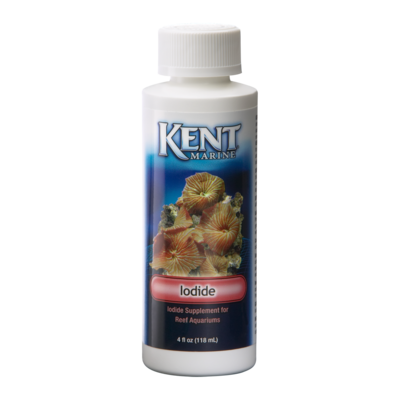
Going Through the Chemicals - Kent's Marine Iodide

Among the chemicals I received was "Kents Marine Iodide".

From the manufacturer -
Iodide Supplement for Reef Aquariums.  KENT MARINE IODIDE replaces iodide needed for proper growth and health of invertebrates and macro-algae. Contains a safe form of iodide, which will not destroy system bacteria.
Directions - Shake well before using. Add 5ml (1 tsp) per 50 gallons of tank capacity every week or 8 drops per 50 gallons each day. Daily dosing is the preferred method.
From The Reef Tank boards -
  • its in your salt mix and most foods
  • Iodine is often (and historically) sourced from marine algae/kelp... so the only thing you will be feeding is the algae.
  • Once again, if you do not test for it, do not dose it.
  • Makes for a great coral dip!
So this bottle will go with the acclimation equipment...

The Ugly SIde of Beautiful Reef Tanks

With all of the stress of moving and acclimating the new adoptions, the thought of "the ugly side" never came to mind.  But I was reminded all to quickly when my wife got home from work.  The previous owners of the new inhabitants had dropped off a little present:


The box of chemicals, food, and other miscellaneous equipment they needed to run their tank.  What a shocker.

I have a personal flaw - the gut-punch word is "ignorance".  I believe the French have a nicer word for it - "naivete".

I have the unenviable contention that I can outmaneuver fate, against all odds.  This contention even trickles down to reef tanks.  I believe that if I provide the correct environment, I will not have to use such chemicals.  As I type this I can see just exactly how naive this is.  But I also have a strength to offset this weakness - compromise.

Here's the game plan.  Research the chemicals, see what they provide and how to use them effectively.  If at all possible, I will find alternatives to some of the chemicals, I hope...  I have a glass box, not 2/3rds of the Earth to play with.  I'm not so naive to not realize that.

There must be hundreds of dollars in that styrofoam box...